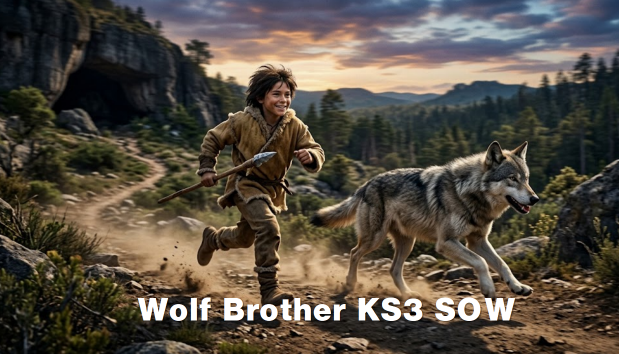
A comprehensive KS3 scheme of work exploring Wolf Brother by Michelle Paver, with at least 23 lessons taking students through all 32 chapters of the novel. The unit develops students’ understanding of the plot, characters, themes and setting while building their confidence in analysing a writer’s methods and producing their own creative writing.
The unit includes two assessments, with preparation lessons for both: one reading assessment and one writing assessment.
**Students Develop Their Ability To:**
Understand and interpret a complete novel through a structured, chapter by chapter approach.
Explore characterisation, relationships and character development.
Analyse how writers use language to create effects and convey meaning.
Examine how tension, suspense, cliffhangers and narrative hooks engage readers.
Analyse quotations and select relevant textual evidence to support interpretations.
Explore key themes, ideas and conflicts within the novel.
Explain how setting and the natural world contribute to atmosphere and meaning.
Explore the influence of historical and cultural context on the novel.
Develop analytical paragraphs supported by relevant evidence and detailed explanations.
Discuss different interpretations and justify ideas using the text.
Develop descriptive and narrative writing through a range of creative tasks.
Develop speaking and listening skills through discussion and collaborative activities.
Apply their reading and writing skills to assessment tasks.
**What’s Included?**
At least 23 ready to teach lessons covering all 32 chapters, with a range of activities to support students’ understanding and develop their analytical and creative skills.
Lessons covering every chapter of the novel, guiding students through the plot, characters, themes and significant events.
A range of activities for each chapter to consolidate understanding and encourage deeper interpretation.
Repeat and retrieval questions in each lesson, linked to previous learning to reinforce knowledge and support retention.
Lessons exploring themes, tension, cliffhangers, narrative hooks, quotation selection, quotation analysis and other key literary methods.
Discussion tasks encouraging students to share interpretations, explore ideas and support their opinions with evidence.
Key contextual lessons and supporting worksheets to develop students’ understanding of the world of the novel.
A variety of analytical questions to develop close reading and written responses.
Creative writing activities and tasks inspired by the novel, its characters, settings and events.
Speaking and listening activities to develop students’ confidence in expressing and explaining ideas.
Reflection and plenary activities to consolidate learning and check understanding.
You must log in and be a buyer of this download to submit a review.