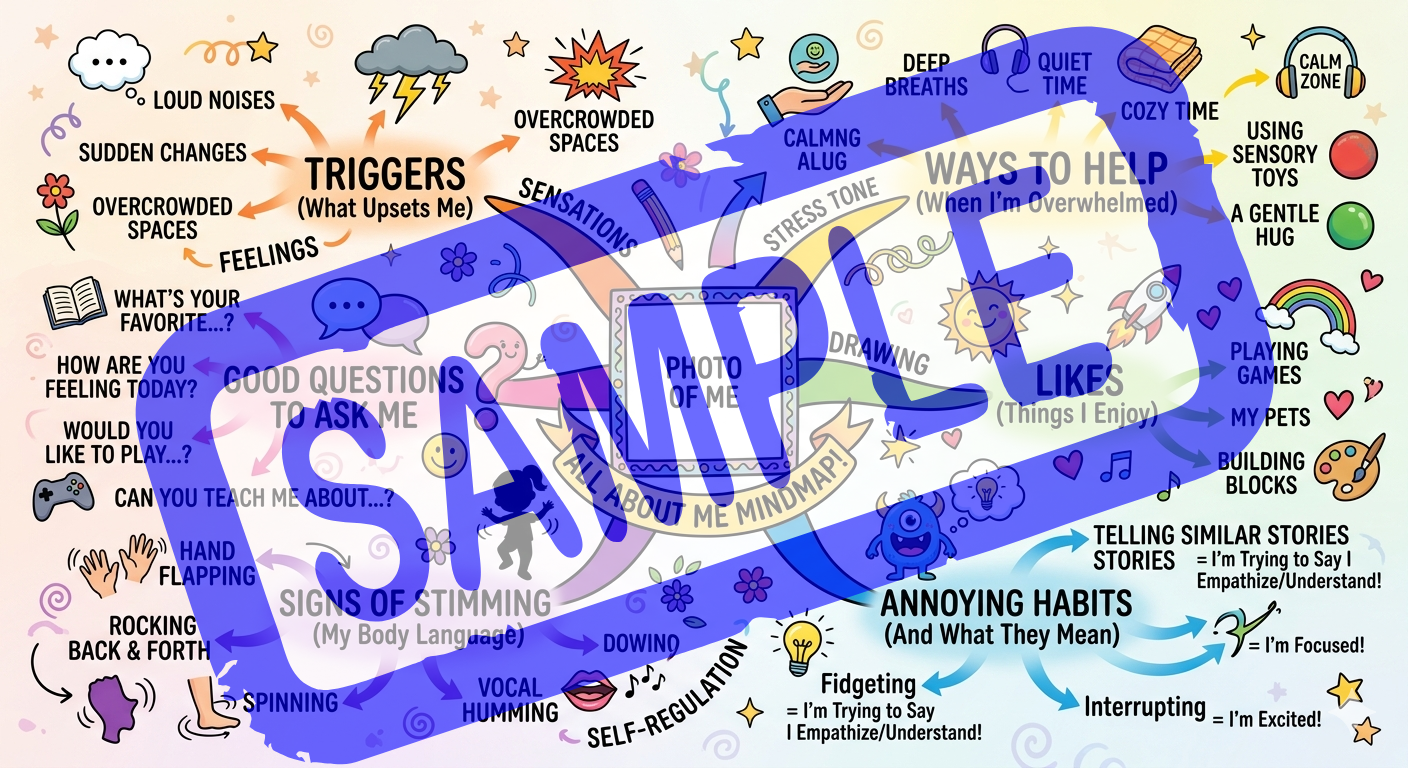
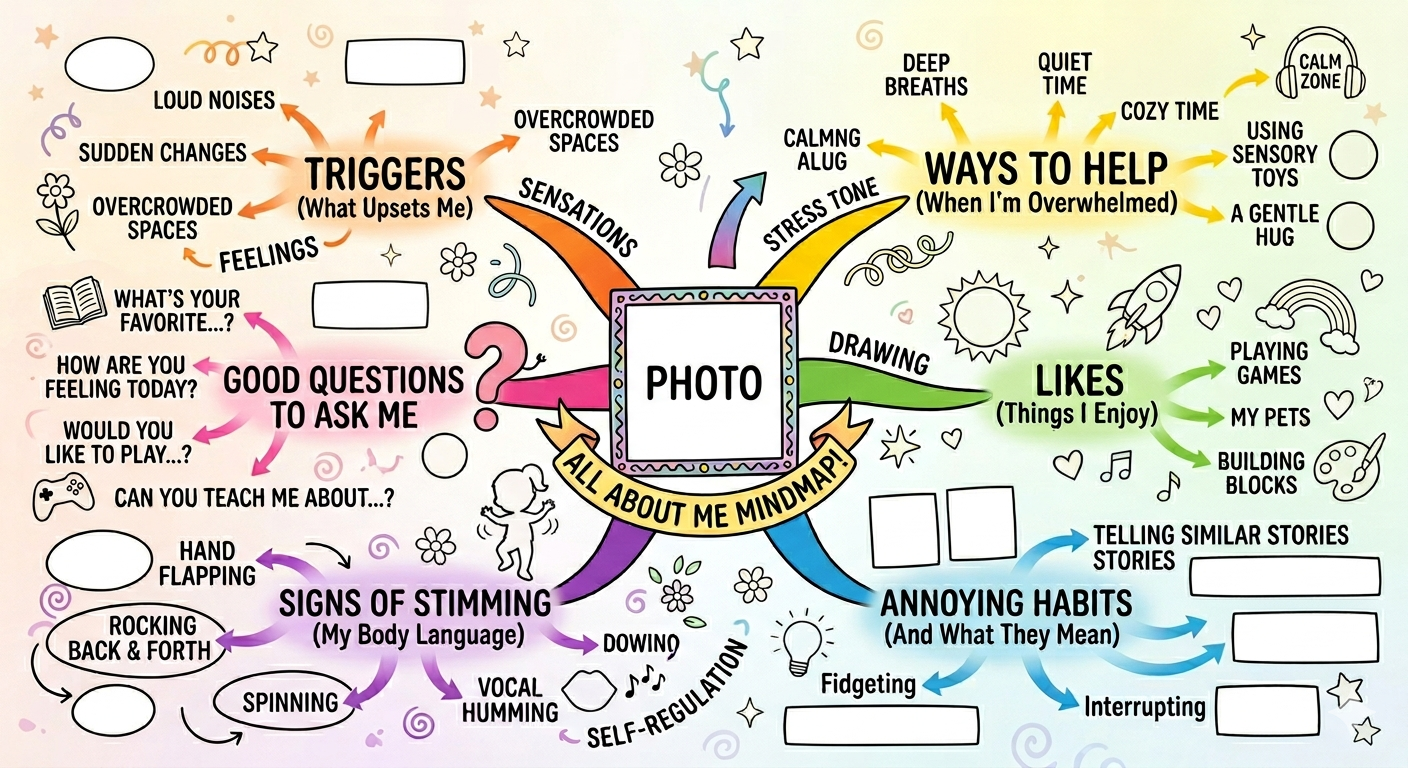
Designed in a vibrant, child-friendly Tony Buzan style, this mindmap serves as a visual, easy-to-digest personal profile. It places the individual literally at the center and uses color-coded branches to explore how they interact with the world, process emotions, and communicate.
The main branches (“arms”) include:
Triggers (What Upsets Me): Identifies sensory overloads or environmental changes (e.g., loud noises, crowded spaces) before they cause distress.
Ways to Help (When I’m Overwhelmed): Actionable, immediate strategies for co-regulation and comfort (e.g., quiet time, sensory toys, deep breaths).
Likes (Things I Enjoy): Highlights passions, hobbies, and comforts, which are excellent for building rapport or de-escalating stress.
Annoying Habits (And What They Mean): Reframe misunderstood behaviors. For example, it explains that interrupting or telling a parallel story isn’t rude—it’s an attempt to say, “I empathize and understand you!”
Signs of Stimming (My Body Language): Normalizes self-regulation behaviors (like hand-flapping, rocking, or humming) so others recognize them as processing tools rather than misbehavior.
Good Questions to Ask Me: Gives others a direct “cheat sheet” on how to initiate meaningful, comfortable conversations.
This is an ideal format for a One-Page Profile or “Passport” for neurodivergent children (or adults!).
In Schools: Give a completed copy to supply teachers, new classroom assistants, or specialized staff so they instantly understand a child’s sensory profile and communication style without reading a lengthy file.
Extracurriculars: Share it with sports coaches, scout leaders, or club organizers who might not have formal training but want to support the child effectively.
Moving to a new classroom, school, or routine can cause immense anxiety.
Sit down with the individual to fill this out together before a big change. It empowers them to articulate their own needs and gives them a sense of control over how they are introduced to new people.
The “Annoying Habits” branch is an incredible tool for empathy.
Siblings/Peers: Use it to help siblings or classmates understand why a child acts a certain way. Realizing that an “annoying” behavior is actually an attempt to connect or regulate completely changes the social dynamic from frustration to empathy.
Self-Reflection: It helps the individual realize their behaviors are valid and have meaning, reducing the shame often associated with stimming or unique conversational styles.
The Center Photo: Placing a photo (or letting a child draw a self-portrait) in the middle makes the document deeply personal and instantly engaging.
Conversation Starter: Use the “Good Questions to Ask Me” branch as a literal script for new friends or support workers to build quick, genuine rapport.
You must log in and be a buyer of this download to submit a review.